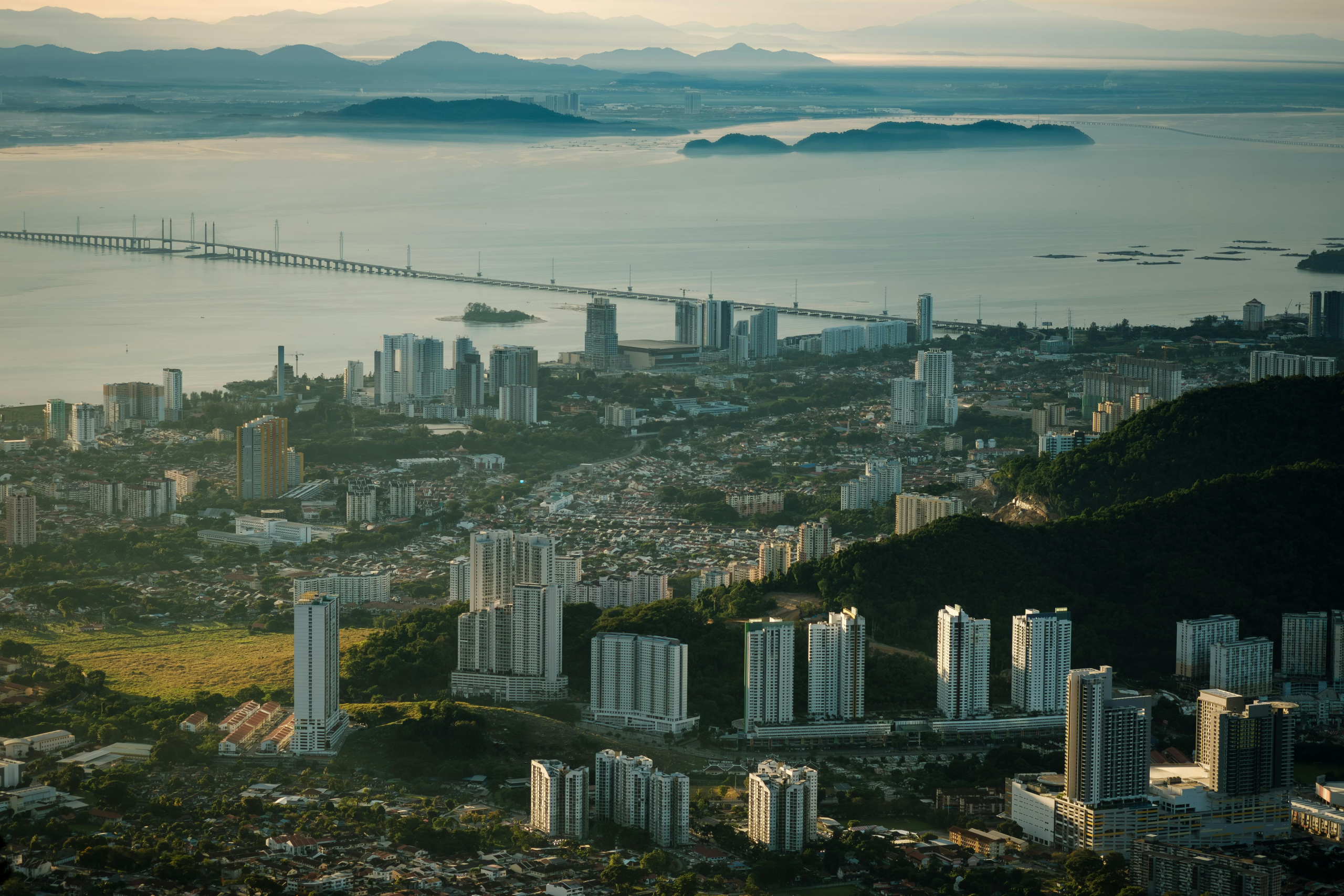
When I first read that the government set a bodacious, audacious, and frankly ambitious goal for Visit Malaysia 2026—targeting a staggering 47 million tourists —my immediate reaction was pure skepticism. It sounded like a pipe dream, a number pulled out of thin air just to make headlines. But then, I stopped looking at the national posters and started looking at the raw data coming out of Penang. If you look at what happened in 2024 and the trajectory for 2025, that “impossible” target doesn’t just look achievable; it looks like we might actually smash right through it. The story of Penang’s post-pandemic explosion—driven by a 200%+ surge in Chinese travelers and an unbreakable backbone of medical tourists—isn’t just a local success; it is the blueprint for how Malaysia intends to win 2026.
The Penang Tourism Explosion
| Catalysts | Facts & Figures | Strategic Impact |
| 1. The 2025 Tourism Explosion | 7.22 Million passenger movements recorded at Penang International Airport in just the first 11 months of 2025 (+6% YoY). | We have officially passed the “recovery” phase. The airport is now pushing its physical limits, signaling a mature market ready for high-value expansion. |
| 2. The China “Tsunami” | New Direct Routes: Spring Airlines launches daily flights from Shanghai (Jan 30, 2026) and Guangzhou (Feb 1, 2026). | Visa-free entry was the spark; these flight launches signal huge demand from Chinese tourists. By physically widening the supply of seats, a massive influx of Chinese tourists is guaranteed for VM2026. |
| 3. Medical Tourism | #1 Source Market: Indonesia continues to lead (369,088+ direct arrivals in 2024, climbing in 2025). | This is the state’s “recession-proof” safety net. These travelers fill hotels and hospitals regardless of economic downturns, providing a stable baseline for the industry. |
| 4. The Middle East Corridor | Flydubai Success: The route launched in Feb 2024 has matured, showing strong load factors throughout 2025. | It’s not just about Dubai; this route successfully opened a direct corridor for UK and European travelers to bypass KLIA and land straight in George Town. |
The Global Spotlight: When the World’s Biggest Media Agrees
If the raw arrival statistics are the smoke, here is the fire: the international media has suddenly decided that Penang is the place to be. It is one thing for us locals to hype up our island, but it is entirely another when The New York Times ranks Penang at No. 15 on its “52 Best Places to Go in 2026.” That is a massive endorsement, essentially putting a giant neon “VISIT HERE” sign on the island for millions of American and European travelers. And they weren’t alone in the praise.
The CNN Travel Team also flagged Penang as a top-15 global destination, perfectly capturing the island’s allure as “a taste of history.” They even dropped a little truth bomb that I love sharing with visitors: remember those stunning, pastel-hued shophouses and chaotic markets in Crazy Rich Asians? Spoiler alert—most of those “Singapore” scenes were actually filmed right here in Penang. That unique blend of Chinese, Southeast Asian, and European influences—our Peranakan heritage—is what mesmerizes the West. And nothing showcases that heritage quite like our food scene, now firmly stamped with the Michelin seal of approval.
CNN specifically singled out Auntie Gaik Lean’s Old School Eatery in George Town, and honestly, they couldn’t have picked a better ambassador. It is “beloved for a reason.” Walking in there feels like stepping into a time capsule—vintage decor, colorful tiles, and 1950s tunes drifting through the air. It earns its “old school” name, but the Michelin Star proves the cooking is world-class. When you have global tastemakers telling tourists that Penang offers this level of culture and culinary perfection, that “audacious” government target of 40+ million visitors starts to look less like a gamble and more like a guarantee.
Penang International Airport 2024 Arrivals Data
| Rank | Country | 2024 Arrivals (Air) | Trend vs 2023 | Primary Reason for Visit |
| 1 | Indonesia | 369,088 | ⬆️ 6.7% | Medical Tourism (Overwhelming majority) |
| 2 | Singapore | 177,882 | ⬇️ 4.5% | Food/Weekend Trips (Note: Many arrive by Cruise/Car, not air) |
| 3 | China | 120,245 | ⬆️ 219% | Heritage/Leisure (Driven by Visa-Free travel) |
| 4 | Taiwan | 42,035 | ⬆️ 19% | Culture/Food |
| 5 | Thailand | (Rising) | ⬆️ 41% | Shopping/Food |
When I first looked at Penang International Airport’s arrival data, I was genuinely surprised to find that the top visiting nationality was Indonesian. I had assumed the majority of visitors would be Singaporean or Chinese, but never in my wildest imagination did I expect Indonesia to take the top spot.
I then dug deeper, and pulled more passenger data from previous years. Here’s what I found:
Yearly Indonesian Arrivals via Penang International Airport
| Year | Direct Air Arrivals | Growth Rate | The Context |
| 2023 | 345,786 | (Base) | Post-pandemic recovery mode. |
| 2024 | 369,088 | +6.74% | Steady, consistent growth despite global economic headwinds. |
| 2025 | ~380,000+ (Projected) | +12.3% | Based on Jan-Sept actuals (284,364 arrivals). Shows acceleration, not slowing down. |
This set of data just shows Indonesian tourists that travelled to Penang via flight. There’s definitely a lot of others that reach Penang via car/bus/train.
It finally made sense when I realized that for our neighbors in Indonesia, Penang isn’t just a holiday destination—it’s their first option when it comes to medical treatments. The massive number of arrivals suddenly clicks when you step into the lobby of any major private hospital here, like Island Hospital or Gleneagles or Adventist Penang. You don’t just see patients; you see entire families with luggage, fresh off the morning flight from Medan or Jakarta. They aren’t here primarily for the beaches or the hawker food (though they certainly enjoy them); they are here because they trust Penang’s medical expertise more than their own local options. It’s a specialized kind of tourism built on necessity and trust, and it explains why the flights from Indonesia are always full, regardless of whether it’s holiday season or not.
Total Number of Foreign Patients in Penang
| Year | Total Foreign Patients | Growth Rate | The Indonesian Factor |
| 2024 | 418,608 | (Base) | #1 Source Market (Indonesians) |
| 2025 | 449,289 | +7.3% | Indonesians continue to dominate. |
If you want to know who is keeping the lights on in Penang’s economy, look at the hospital admissions. In 2025 alone, Penang recorded 449,289 foreign patients—a 7.3% jump from the previous year. And let’s not beat around the bush: the vast majority (probably close to 90 percent) of them are Indonesian. With over 56 weekly flights shuttling patients from Medan and Jakarta, they aren’t just visiting; they are relying on Penang’s healthcare systems for their health.
The Significance of Indonesian Medical Tourists
| Economic Driver | How It Works | The Real-World Impact |
| 1. The Multiplier Effect | Medical tourists spend far more than just hospital fees. They bring family, stay for weeks, and shop heavily. | ~4x Spending: For every RM1,000 spent on surgery, an estimated RM3,000–RM4,000 flows into local hotels, retail, and transport. |
| 2. Airport Viability | A steady stream of patients ensures flight routes remain profitable year-round, not just during holidays. | Connectivity: Supports ~60 weekly direct flights from Indonesia (Medan, Jakarta, Surabaya). This volume keeps routes open for business and leisure travelers too. |
| 3. Recession-Proofing | Unlike holiday-goers, patients do not cancel essential surgeries due to bad weather or economic downturns. | Stability: Provides a guaranteed economic “floor.” Even in low tourist seasons or recessions, hospitals and surrounding hotels remain fully booked. |
| 4. Direct Revenue | Cash-paying patients inject foreign currency directly into the state’s healthcare and banking systems. | Market Dominance: Penang captures nearly 60% of Malaysia’s total medical tourism revenue, bringing in hundreds of millions in fresh capital annually. |
Why So Many Indonesian Medical Tourists Continue to Trust the Penang Healthcare
It Starts with Trust (And a Bit of History) If you ask an Indonesian patient why they chose Penang over Jakarta or Singapore, the answer is rarely just about money—it is about peace of mind. For decades, there has been a deep-seated belief among our neighbors in Northern Sumatra that if you have a serious disease, you go to Penang to get it “fixed.” It’s a reputation earned over generations. I’ve spoken to families in hospital lobbies who tell me their parents came here for heart surgery twenty years ago, and now they are here for their own check-ups. That kind of intergenerational trust is something no marketing budget can buy; it’s word-of-mouth reputation passed down through families who genuinely believe that Penang’s specialists are simply the best in the region.
The “No-Stress” Environment Then there is the comfort factor, which is honestly the secret sauce. Walking into a hospital in a foreign country can be terrifying, but for an Indonesian, walking into a Penang hospital feels surprisingly like home. The doctors here don’t just speak English; they speak fluent Malay and often the same Hokkien dialect used in Medan. There is zero language barrier. Patients can describe their pain in their native tongue and be understood instantly. When you combine that with the fact that the food, the weather, and the culture are nearly identical, the “medical trauma” disappears. It’s less like traveling abroad and more like visiting a cousin who happens to be a world-class surgeon.
The Practical “Sweet Spot” Finally, you can’t ignore the sheer practicality of it. Penang’s advantages are very obvious: the medical technology is on par with Singapore, but the cost is a fraction of the price (SGD 3x anyone?). For a middle-class family in Medan or Banda Aceh, a 45-minute flight to Penang is actually faster and cheaper than flying to Jakarta. It has become so convenient that many treat it like a domestic commute. They can hop on a morning flight, see a specialist, grab a plate of Nasi Kandar, and potentially be home by dinner—or stay for a holiday if the news is good. It is this combination of world-class care, cultural familiarity, and unbeatable logistics that makes Penang the default option for many Indonesian patients.
The Revenue from Medical Tourism is So Appealing that even China Wants a Slice of the Pie
It is true that China is rising as a competitor. We are seeing direct flights opening up to Indonesia and aggressive marketing from Chinese medical hubs, likely centered around Sanya. They are even studying our private healthcare model to replicate it. However, I believe there is a hard ceiling to their success with this specific demographic. The friction costs are simply too high.
For an Indonesian patient, choosing China means facing a significant language barrier and a daunting travel itinerary. A sick patient has zero tolerance for airport transits and long flight durations; their priority is speed and comfort. Penang wins this battle before the patient even leaves the house. It is reachable in under an hour from Northern Sumatra—a ‘commute’ rather than a ‘journey.’ Until China can magically shrink the South China Sea or teach their entire nursing staff Bahasa Indonesia, Penang’s advantage remains untouchable.
Top Treatments Sought by Indonesians in Penang
According to 2024–2025 hospital data, the majority of Indonesian patients in Penang are not there for minor check-ups. They are there for tertiary care (complex, high-risk procedures) that they cannot easily access or afford at home.
- Oncology (Cancer Treatment): Many Indonesian patients come for chemotherapy, radiotherapy, and surgical removal of tumors. Penang’s hospitals (like Mount Miriam and Island Hospital) are famous for having advanced PET-CT scanners and radiotherapy machines that are scarce in Sumatra.
- Cardiology (Heart Disease): Complex procedures like Coronary Artery Bypass Graft (CABG) and valve replacements.
- Orthopaedics: Knee and hip replacements are extremely popular, often combined with rehabilitation.
- Health Screening: “Executive Check-ups” are the entry-level product. Many Indonesians fly in for a 1-day full body scan while on a weekend trip.
- IVF & Fertility: A growing segment, with success rates in Penang rivaling Singapore but at 30-40% of the price.
What Medical Tourists Pay
| Treatment / Procedure | Estimated Cost (MYR) | Estimated Cost (USD) | Comparison Note |
| Heart Bypass (CABG) | RM 50,000 – RM 70,000 | $11,000 – $16,000 | ~1/5th the cost of the USA; ~50% cheaper than Singapore. |
| Knee Replacement (Unilateral) | RM 25,000 – RM 35,000 | $5,500 – $8,000 | Includes implant and typical 3-4 day hospital stay. |
| IVF (Per Cycle) | RM 15,000 – RM 20,000 | $3,500 – $4,500 | Highly competitive; Singapore often charges SGD 15k+ (RM 50k+). |
| Cancer Radiotherapy | RM 5,000 – RM 20,000 | $1,100 – $4,500 | Varies wildly by cycles, but widely considered the region’s best value. |
| Executive Health Screening | RM 300 – RM 1,500 | $70 – $350 | The “loss leader” product. A full blood + treadmill + ultrasound scan is often <RM1000. |
| Cataract Surgery (Monofocal) | RM 3,500 – RM 5,000 | $800 – $1,100 | Per eye. Done as daycare (no overnight stay). |
It’s not just about being ‘cheap.’ If it were just about price, Indonesian medical tourists would go to India or Thailand. Penang hits a specific sweet spot: First World technology at Third World prices. An Indonesian patient can get a world-class heart bypass in George Town for RM60,000—a procedure that might cost them double in Jakarta’s top private hospitals and triple in Singapore. The amount of financial savings is so substantial, and with the same level of care and quality of treatments. Penang’s top position as Indonesia’s top medical tourism destination is unshakeable.
Money Talks: How do Indonesian Patients Fund Their Treatments
1. Cash is (Still) King
For the vast majority of Indonesian patients, the payment method is out-of-pocket.
- The “Suitcase” Phenomenon: It is an open secret in the industry that many patients prefer to pay in cash. It is not uncommon to see families settling RM30,000 bills with physical stacks of notes (Ringgit or SGD) or debit cards.
- Why? The middle-class Indonesian patient often finds that paying cash in Penang is still cheaper than paying cash for “VIP” treatment in Jakarta. They view it as a life-investment, often liquidating savings or selling assets for critical surgeries like heart bypasses.
It honestly blew my mind when I learned that most of these huge medical bills (most Indonesian medical tourists arrive in Penang specifically for complex surgeries and treatments that cost a lot of money) are settled in cash. We aren’t talking pocket change; we are often talking about families carrying physical stacks of notes. I realized that for many of these families, emptying a savings account in George Town is actually the fiscally responsible choice. To get this same level of ‘VIP’ speed and attention back in Jakarta would often cost double. So, they aren’t just spending money; they are pooling their family’s resources to make a calculated life investment. They are buying the one thing they can’t get at home: immediate, world-class care without the bureaucracy and unreasonably expensive price tags at home.
2. The “Private Insurance” Loophole (AdMedika)
People assume Indonesian health insurance doesn’t work here. This is a major misconception. It does, but you need the right card.
- The Key Player: The magic word is AdMedika. This is the massive Third-Party Administrator (TPA) that links Indonesian insurers to Malaysian hospitals. Many insurance companies in Indonesia provide coverage in Malaysia (and many other countries) through AdMedika’s panel hospitals.
- How it works: If a patient has a good medical card or high-tier policy from insurers like Prudential Indonesia, Allianz, or Manulife, they often have a “Malaysia/Overseas” rider.
- The Experience: They walk into Island Hospital or Gleneagles, flash their card, and the hospital contacts AdMedika for a Guarantee Letter (GL). If approved, it’s a cashless experience—the patient pays nothing upfront (except maybe a deposit).
AdMedika Malaysia Provider List
| Hospital Name | State | Full Address |
| KPJ Johor Specialist Hospital | Johor | 39-B, Jalan Abdul Samad, Kolam Ayer, 80100 Johor Bahru, Johor, Malaysia. |
| KPJ Ampang Puteri Specialist Hospital | Selangor | 1, Jalan Mamanda 9, Taman Dato Ahmad Razali, 68000 Ampang, Selangor, Malaysia. |
| KPJ Penang Specialist Hospital | Penang | 570, Jalan Perda Utama, Bandar Perda, 14000 Bukit Mertajam, Pulau Pinang, Malaysia. |
| KPJ Kuching Specialist Hospital | Sarawak | Lot 10420, Block 11, Tabuan Stutang Commercial Centre, Jalan Setia Raja, 93350 Kuching, Sarawak, Malaysia. |
| Sabah Medical Centre (KPJ Sabah) | Sabah | Lorong Bersatu, Off Jalan Damai, Luyang, 88300 Kota Kinabalu, Sabah, Malaysia. |
| Sime Darby Medical Centre Ara Damansara | Selangor | Lot 2, Jalan Lapangan Terbang Subang, Seksyen U2, 40150 Shah Alam, Selangor, Malaysia. |
| Sime Darby Medical Centre Subang Jaya | Selangor | 1, Jalan SS 12/1A, SS 12, 47500 Subang Jaya, Selangor, Malaysia. |
| Sime Darby ParkCity Medical Centre | Kuala Lumpur | No. 2, Jalan Intisari Perdana, Desa ParkCity, 52200 Kuala Lumpur, Malaysia. |
| Institut Jantung Negara (IJN) | Kuala Lumpur | 145, Jalan Tun Razak, 50400 Kuala Lumpur, Malaysia. |
| Melaka Straits Medical Centre (Oriental) | Melaka | Pusat Perubatan Klebang, Jalan Klebang Besar, 75200 Melaka, Malaysia. |
| IHEAL Medical Services | Kuala Lumpur | Level 7 & 8, Annexe Block, Menara IGB, Mid Valley City, Lingkaran Syed Putra, 59200 Kuala Lumpur, Malaysia. |
| Putra Specialist Hospital Melaka | Melaka | 169, Jalan Bendahara, 75100 Melaka, Malaysia. |
| LohGuanLye Specialist Centre | Penang | 238, Macalister Road, 10400 George Town, Pulau Pinang, Malaysia. |
| Top Vision Specialist Centre (Setia Alam) | Selangor | Unit 11-2 & 11-3, No. 2, Block 2, Jalan Setia Prima (S) U13/S, Setia Alam, Seksyen U13, 40170 Shah Alam, Selangor, Malaysia. |
| Top Vision Specialist Centre (Banting) | Selangor | 1-G-A, Jalan Sultan Abdul Samad, 42700 Banting, Selangor, Malaysia. |
| Top Vision Specialist Centre (Kuala Selangor) | Selangor | No. 53A & 55, Jalan Peninsula Utama 1, Peninsula Park, Pasir Penambang, 45000 Kuala Selangor, Selangor, Malaysia. |
| Top Vision Specialist Centre (Batu Pahat) | Johor | No. 1 & 2, Taman Maju, Jalan Maju, 83000 Batu Pahat, Johor, Malaysia. |
| Beacon Hospital | Selangor | No. 1, Jalan 215, Section 51, Off Jalan Templer, 46050 Petaling Jaya, Selangor, Malaysia. |
| Penang Adventist Hospital | Penang | 465, Jalan Burma, 10350 George Town, Pulau Pinang, Malaysia. |
| Prince Court Medical Centre | Kuala Lumpur | 39, Jalan Kia Peng, 50450 Kuala Lumpur, Malaysia. |
| Sunway Medical Centre | Selangor | No. 5, Jalan Lagoon Selatan, Bandar Sunway, 47500 Petaling Jaya, Selangor, Malaysia. |
| Cardiac Vascular Sentral (CVSKL) | Kuala Lumpur | Jalan Stesen Sentral 5, Kuala Lumpur Sentral, 50470 Kuala Lumpur, Malaysia. |
Indonesian policyholders possessing premium-tier medical coverage—specifically those utilizing the AdMedika network with eligible medical cards—can leverage seamless cashless admission facilities at a comprehensive network of Malaysian private hospitals. Through this established cross-border infrastructure, eligible patients need only secure a Guarantee Letter (GL) prior to their travel to bypass significant out-of-pocket expenses for inpatient procedures. This financial interoperability effectively removes the burden of upfront payment, granting immediate access to premier institutions such as Sunway Medical Centre, Prince Court, and the KPJ network, thereby ensuring that administrative logistics do not impede the delivery of critical medical care.
3. The “Corporate” Perk
For high-level executives in Medan and Jakarta, medical treatment in Penang is often part of their employment contract.
- MNC Coverage: Big multinational corporations (and even some large Indonesian conglomerates) provide direct corporate coverage. The company HR issues a specific Guarantee Letter addressed to the Penang hospital, effectively saying, “Fix our CFO, and bill us later.”
4. What DOESN’T Pay for It: BPJS
This is the most important distinction.
- The National Scheme: Indonesia’s universal healthcare, BPJS (Badan Penyelenggara Jaminan Sosial), strictly does not cover overseas treatment.
- The Driver: This is actually a driver for Penang. Wealthy Indonesians view BPJS hospitals as overcrowded and under-resourced. They fly to Penang specifically to escape the BPJS system, willing to pay premium prices for speed and comfort.
| Payment Method | Estimated Share | Who uses it? |
| Out-of-Pocket (Cash/Card) | ~60-70% | The mass market. Families engaging in “life-saving” spending using savings. |
| Private Insurance (Cashless) | ~20-25% | The upper-middle class. Requires policies with “Overseas” riders (via AdMedika). |
| Corporate Guarantee | ~5-10% | Senior executives and business owners with company perks. |
| BPJS (National Insurance) | 0% | Strictly not accepted. This forces patients to seek private options. |